
Category: Uncategorized
-
Functional Fertilizer Additives
Functional Fertilizer Additives refer to substances added during fertilizer production or application to improve physical and chemical properties, enhance nutrient use efficiency, or impart specific biological functions to fertilizers. Core Functions & Main Classifications Urease Inhibitors (e.g., NBPT): Slow down urea hydrolysis to reduce ammonia volatilization losses. Nitrification Inhibitors (e.g., DMPP, DCD): Suppress the conversion…
-
Core Miticides Comparison Table
Category Active Ingredient (AI) Target Lifestages Key Advantages (Pros) Key Disadvantages (Cons) Best Application Scenarios / Remarks New-Generation & High-Efficiency Cyflumetofen Highly effective on Larvae & Nymphs; moderately controls Eggs & Adults. ① No cross-resistance with traditional miticides; highly effective against resistant “super red spiders”.② Fast-acting: Mites stop feeding within hours; peak mortality occurs in…
-
Biological Control Technologies in cotton fields
Conservation and Augmentation of Natural Enemies against Cotton Diseases and Pests Throughout the cotton growth cycle, critical emphasis must be placed on utilizing natural enemies to maximize their predatory and parasitic biocontrol efficacy. For instance, in crop rotation systems involving cotton and wheat, leaving wheat straw in the field for two days post-harvest can effectively…
-
Biological Characteristics of the Fall Armyworm (Spodoptera frugiperda)
1. Highly Polyphagous Nature (Broad Host Range) Extensive Host Spectrum: A highly polyphagous and voracious pest capable of feeding on more than 80 plant species. Preference for Poaceae: It shows a strong preference for grass crops, most heavily damaging corn (maize), rice, wheat, barley, sorghum, millet, sugarcane, ryegrass, and Sudan grass. Broad Crop Infestation: Beyond…
-
Osthole’s core advantages and mechanisms of action as a natural botanical pesticide.
Combined with the characteristics you mentioned, Osthole demonstrates unique value in modern green agriculture and organic farming. The following is a further expansion and deepening of the traits you highlighted: 1. The Unique “Chemical Key”: The Isopentenyl Structure The “isopentenyl structure” you mentioned is the core reason behind Osthole’s potent biological activity. Dual Activity: Chemically,…
-
Cholecalciferol (Vitamin D3) rodenticide
Cholecalciferol (Vitamin D3) rodenticide is a novel, eco-friendly, and highly effective non-anticoagulant rodenticide. It controls rodent populations by disrupting the calcium and phosphorus metabolic balance within their bodies. The following is a detailed analysis of the mechanism, advantages, disadvantages, and usage guidelines of cholecalciferol rodent control: Core Rodenticidal Mechanism The primary working principle of cholecalciferol…
-
Energy storage equipment applications in modern agriculture
Energy storage equipment is becoming an essential energy cornerstone driving modern agriculture toward digital, green, and high-yield transformation. Core Application Scenarios PV-Storage Integrated Greenhouses: Combines agrivoltaic systems on greenhouse roofs with Battery Energy Storage Systems (BESS). It stores excess solar energy during the day and powers grow lights, integrated water-fertilizer systems, and climate control equipment…
-
The combined use of chemical and biological pesticides
The combined use of chemical and biological pesticides—often referred to as the “Chemical + Biological” (C+B) integrated approach—is the core strategy for green, high-yield agriculture now and in the future. Their advantages are highly complementary. Combining them creates a “1+1>2” synergistic effect and solves critical pain points like pest resistance, chemical residues, and ecological damage.…
-
The perspective on the future of chemical and biological pesticides
In the blueprint of future agriculture, chemical pesticides and biopesticides are not in a zero-sum, adversarial relationship; instead, they are moving toward a new, synergistic paradigm of “complementary strengths and deep integration.” Driven by increasingly stringent global standards for food security, ecological protection, and chemical residue limits, the agrochemical industry is undergoing a profound “green…
-
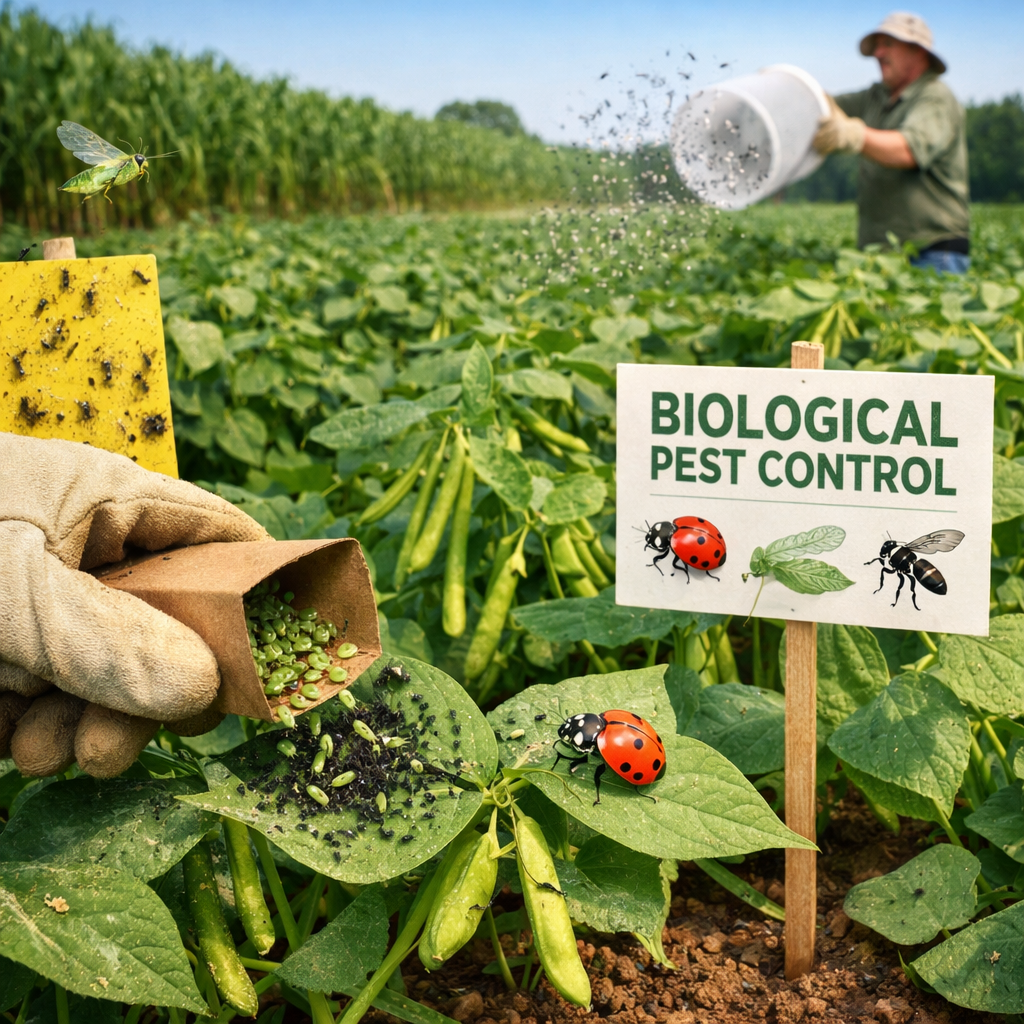
Green Control Technical Scheme for Cowpea Pests and Diseases
This scheme is formulated to guide green cowpea production, enhance the application of green control technologies, and ensure the production safety and quality of cowpeas. I. Control Strategy Implement the plant protection principle of “Prevention First, Integrated Management.” Effectively control major cowpea pests and diseases and reduce the risk of excessive pesticide residues by coordinating…

