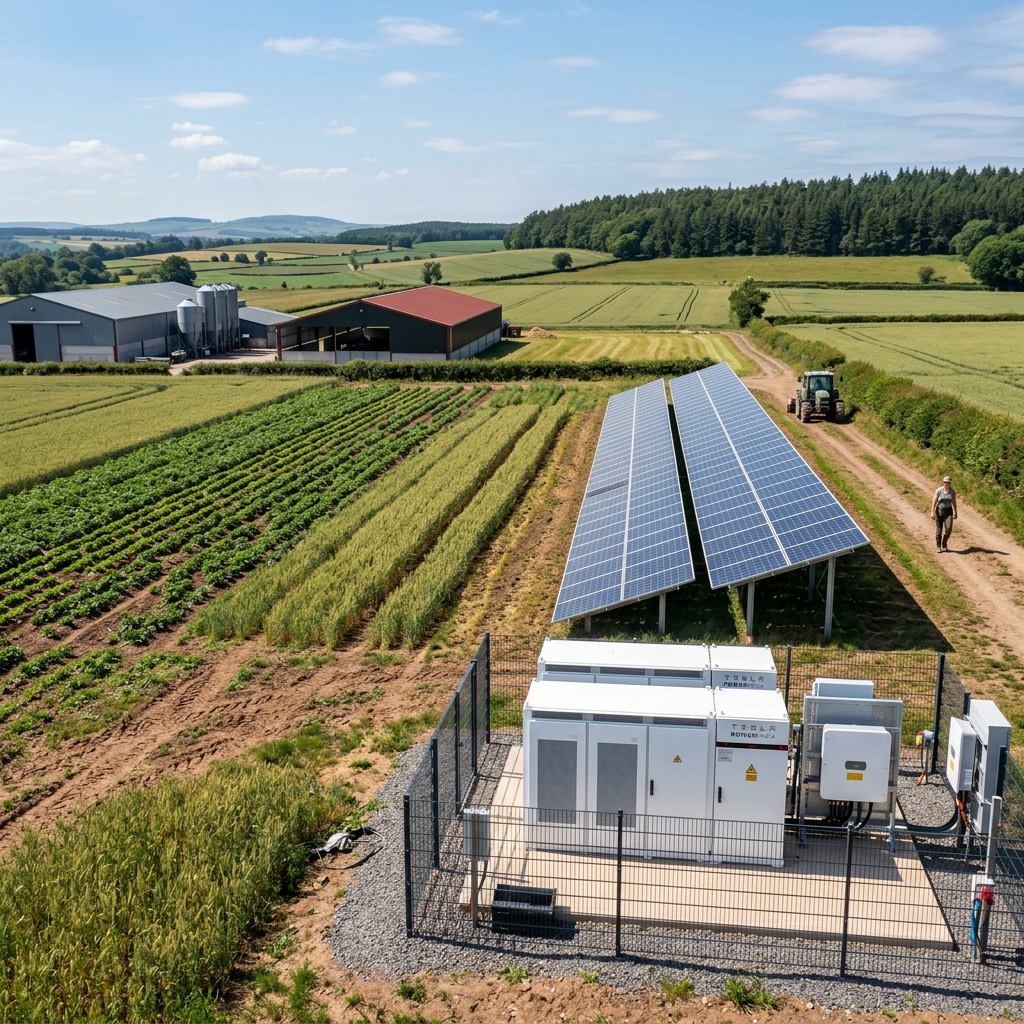
Energy storage equipment is becoming an essential energy cornerstone driving modern agriculture toward digital, green, and high-yield transformation.
Core Application Scenarios
- PV-Storage Integrated Greenhouses: Combines agrivoltaic systems on greenhouse roofs with Battery Energy Storage Systems (BESS). It stores excess solar energy during the day and powers grow lights, integrated water-fertilizer systems, and climate control equipment at night.
- Agri-product Cold Chain Logistics and Warehousing: Cold storage facilities require 24/7 temperature control and are highly energy-intensive. Storage equipment serves as emergency backup power to prevent spoilage of fruits, vegetables, and meat during sudden blackouts.
- Smart Irrigation and Modern Farming: In livestock and aquaculture farms, storage systems provide stable current for automated feeders, aerators, and irrigation pumps to ensure biosecurity.
- Power Supply for Remote Off-grid Areas: In remote farming and pastoral regions such as hills, deserts, or overseas areas without grid coverage, microgrids combining “solar + wind + storage” are built to solve basic production and living electricity needs.
- Mobile Agricultural Machinery Charging Stations: Provides rapid field-charging support for electric tractors, agricultural haulers, and plant-protection drones, enhancing continuous agricultural operations.
Core Value and Advantages
- Peak Shaving and Valley Filling to Reduce Electricity Bills: Utilizing time-of-use pricing, the system charges during off-peak night hours and discharges during peak day hours, reducing cold storage and greenhouse electricity costs by 20% to 35%.
- Ensuring Power Continuity: Seamlessly switches to backup power during grid failures to prevent crop irrigation disruption or livestock mortality, effectively mitigating production risks in the primary industry.
- Improving Renewable Energy Consumption: Smoothes out the volatility of solar and wind power, enabling farms to achieve a higher proportion of clean energy self-sufficiency and reduce carbon emissions.
- Empowering IoT Perception: Storage equipment can connect with various sensors inside greenhouses, providing long-term power for IoT devices such as soil monitors and weather stations in smart agriculture.


Leave a Reply