
This scheme is formulated to guide green cowpea production, enhance the application of green control technologies, and ensure the production safety and quality of cowpeas.
I. Control Strategy
Implement the plant protection principle of “Prevention First, Integrated Management.” Effectively control major cowpea pests and diseases and reduce the risk of excessive pesticide residues by coordinating measures such as source control, healthy cultivation, ecological regulation, biological control, physical/chemical trapping, and scientific medication.
II. Target Pests and Diseases
- Major Pests: Thrips, leafminers, cowpea pod borers, aphids, beet armyworms, tobacco cutworms, spider mites, whiteflies, etc.
- Major Diseases: Fusarium wilt, rust, anthracnose, root rot, powdery mildew, gray mold, cercospora leaf mold, phytophthora blight, circular leaf spot, etc.
III. Control Measures
(A) Source Control
- Rational Layout: Avoid continuous cropping. Rotate with non-leguminous crops like rice or corn. Do not plant other legumes (e.g., peanuts) near the cowpea fields of the same season.
- Field Sanitation: Before production, clear weeds and plant debris. After harvest, pull up vines promptly and move them out of the field for centralized harmless treatment.
(B) Healthy Cultivation
- Healthy Seedlings: Use high-quality, disease-resistant varieties suitable for local planting to cultivate pest-free, robust seedlings.
- High-Ridge Cultivation: Deep plow soil (>30 cm) and sun-dry for 5–7 days before sowing. Raise ridges (20–30 cm high) and cover with silver-black plastic mulch (silver side up to repel thrips/aphids, black side down to suppress weeds).
- Water and Fertilizer Management: Apply sufficient base fertilizer (organic and microbial). Coordinate top-dressing with water management.
- Immune Induction: Use elicitors (e.g., Oligochitosan, Brassinolide) or foliar fertilizers (amino acids, humic acids) to improve cowpea stress resistance.
(C) Ecological Regulation
Plant functional plants along field edges (e.g., cosmos to attract hoverflies, ladybugs, and parasitic wasps; mint or oregano to repel pests) to maintain natural enemy populations.
(D) Enhanced Monitoring
Use yellow sticky traps for leafminers/whiteflies/aphids; blue/pink traps (with thrip pheromones) for thrips; and sex pheromones for pod borers and armyworms. Conduct manual surveys for mites and diseases.
(E) Biological Control
- Biopesticides:
- Thrips: Apply Metarhizium anisopliae granules (5–10 kg/mu) mixed with soil before sowing; use foliar sprays of Metarhizium or Matrine during growth.
- Beet Armyworm: Use Spodoptera exigua nuclear polyhedrosis virus (SeNPV).
- Soil-borne Diseases: Use Bacillus subtilis or Paenibacillus polymyxa for root drenching.
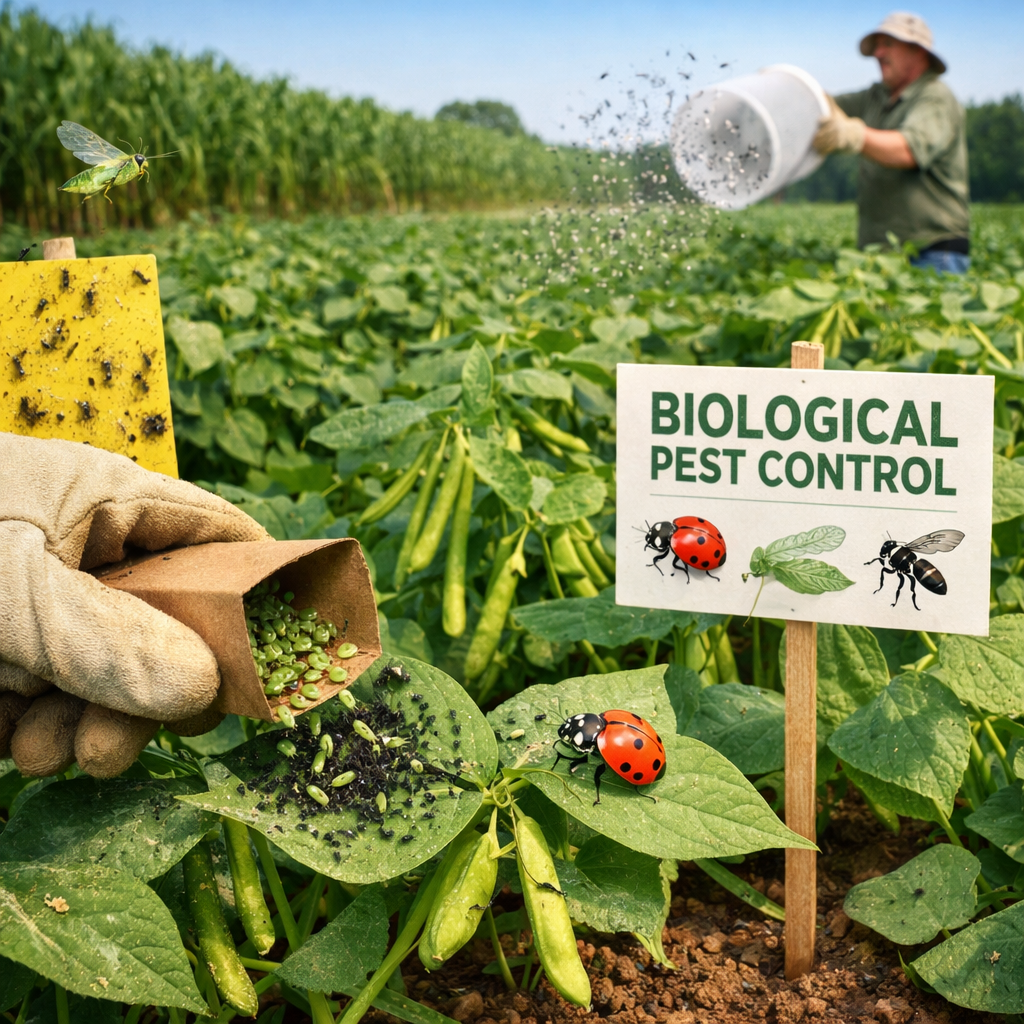
- Natural Enemies: In greenhouses, release predatory mites, Encarsia formosa, ladybugs, or Orius bugs at the early stage of infestation.
(F) Physical and Chemical Trapping
- Insect Nets: Use 60–80 mesh nets to block thrips, leafminers, and whiteflies.
- Pheromone Trapping: Use sex pheromones to mass-trap cutworms, armyworms, and pod borers.
(G) Scientific Medication
Rotate pesticides with different modes of action based on monitoring results.
- Pest Control:
- Seedling to Pre-flowering: Abamectin, Chlorantraniliprole, Lufenuron, Spirotetramat, etc.
- Flowering/Podding to Harvest: Priority given to pesticides with a Pre-Harvest Interval (PHI) of ❤ days, such as Metarhizium, Matrine, Spinetoram, Spinosad, Indoxacarb, etc.
- Disease Control: Use Matrine, Osthole, Difenoconazole + Propiconazole, Pyraclostrobin, etc., to control rust and other diseases.

 WENFENG ECO AGRI CO., LTD.
Leave a comment